Quercetin Benefits: How This Antioxidant in Herbs of Gold Quercetin Complex Supports Immune Health
Quercetin has stumbled into fame as the ingredient of the moment over the past few years. But what exactly is quercetin, how does it work, when should you use it, and how should it be taken?
This article has been written by Herbs of Gold
What is Quercetin?
The first hurdle with quercetin is how to pronounce it! Pronounced in three syllables - “Kwur-si-tin”, when the name is broken down this way, it actually rolls off the tongue pretty easily.
Quercetin is an active compound naturally found in plants and is one of the major flavonoids in our diet, making up as much as 75% of our total flavonol intake [1]. Quercetin is the pigment responsible for the vibrancy of colour in fruits and vegetables and as such, features in abundance in plant-based diets.
How does quercetin work?
Quercetin is known for its noteworthy activity in modulating the immune system, through multiple pathways, but particularly through its antioxidant activity.
Antioxidants support the body’s natural defence mechanisms – the immune system! As an antioxidant, quercetin acts as a free radical scavenger, donating electrons to free radicals and neutralising oxidative stress. Free radicals can cause damage to cell membranes and oxidative stress can compromise the immune. Therefore, improved antioxidant capacity helps to support immune system function.
Food sources of quercetin
Quercetin can be naturally found in many plants as it occurs as a flavonoid, which is a type of polyphenol. It is present in abundance in many colourful fruits, vegetables, herbs, seeds and grains. The following foods are good sources of quercetin, as measured per 100g:
- Red onions – 32mg
- Apples – 4mg
- Grapes – 2mg
- Tea – 1mg
- Tomatoes – 4mg
- Berries – 1-7mg
- Cauliflower – 3mg
- Cabbage – 10mg
- Buckwheat – 23 mg
If you’re increasing your intake of quercetin-rich fruits and vegetables, your daily intake is likely to be in the range of 50–100mg. However, the actual amount can vary considerably depending on the type of produce, growing conditions and even which part of the plant is eaten. Red onions contain the highest amounts due to their natural pigment content, with the outer rings and the portion near the root being richest in quercetin.
To help preserve quercetin content, it’s best to peel off as little of the outer layers as possible. Eating the skin of apples also helps maximise quercetin intake, as it is rich in pigment.
One study also found that organically grown tomatoes contained up to 79% more quercetin than conventionally grown tomatoes [2]. These natural variations highlight how factors such as plant part, colour and ingredient quality can influence overall quercetin intake from diet alone.
When should you use quercetin?
As an antioxidant, quercetin can be beneficial for maintaining overall good health. Specifically, quercetin supports healthy immune system function so can be taken at times when extra immune support is needed.
How should you take quercetin?
Research recommends taking quercetin in divided doses, as this is the most beneficial way to access the benefits of flavonols[3]. Taking one tablet, three times a day provides a therapeutic dose of quercetin over a spaced-out period of time, allowing the nutrient to be absorbed and metabolised in stages.
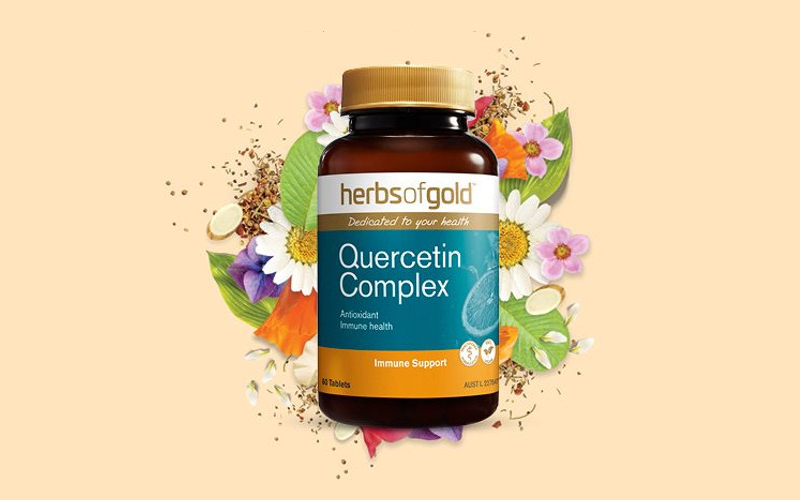
Herbs of Gold offers high-strength quercetin in a therapeutic formula, Herbs of Gold Quercetin Complex. This golden formula includes quercetin, supported by a combination of rutin and hesperidin not only for their combined potent antioxidant actions, but also for their ability to support healthy blood vessels and capillaries. This well-rounded formula also contains vitamin C, supporting both the health and function of the immune system.
References:
[1] Chun, O. K., Chung S. J., & Song, W. O. (2007). Estimated dietary flavonoid intake and major food sources of U.S. adults. Journal of Nutrition, 137(1),1244–1252.
[2] Mitchell, A. E., Hong, Y. J., Koh, E., Barrett, D. M., Bryant, D. E., Denison, R. F., & Kaffka, S. (2007). Ten-year comparison of the influence of organic and conventional crop management practices on the content of flavonoids in tomatoes. Journal of Agricultural and Food Chemistry, 55(15), 6154–6159.
[3] Batiha, G., Beshbishy, A., Mulla, Z., Ikram, M., El-Hack, M., Taha, A., Algammal, A., & Elewa, Y. (2020). The pharmacological activity, biochemical properties, and pharmacokinetics of the major natural polyphenolic flavonoid: quercetin. Foods, 9,374.
Always speak with your doctor before taking any action regarding your health. Supplements have a wide range of potential effects and it's important to ensure that they are right for you. This article is not intended to diagnose, treat, or cure any disease.